
If you grew up in Poland, there's a good chance kotlet schabowy (breaded pork chop) was on the Sunday dinner table more often than not. Crispy, golden, and served with potatoes and a warm cabbage, it's one of those meals that instantly brings back childhood memories.
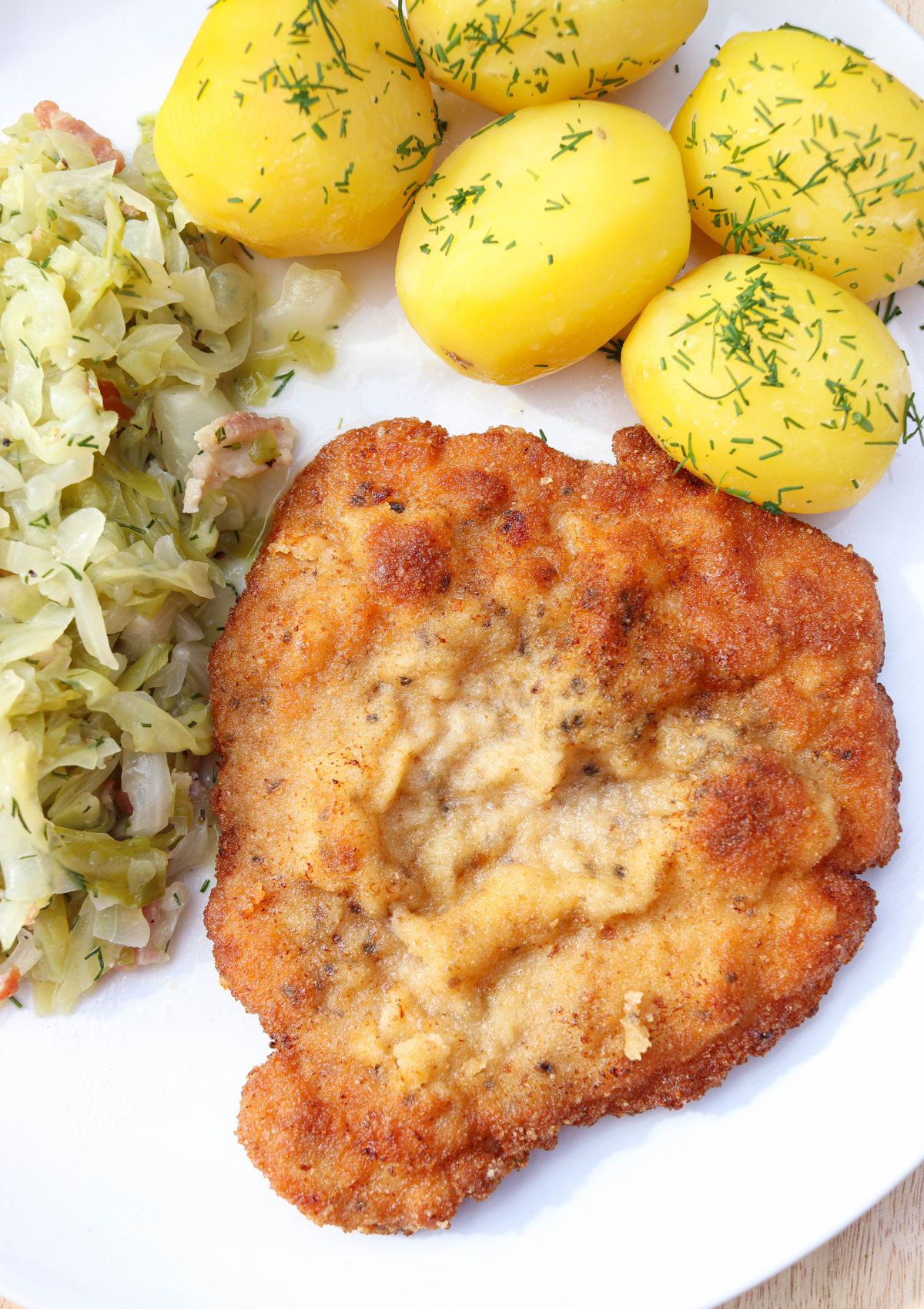
If you've never had it before, think of it as Poland's answer to schnitzel. Thin pork loin chops are coated in flour, egg, and breadcrumbs, then pan-fried until perfectly crisp on the outside while staying juicy inside. It's simple, comforting, and made with everyday ingredients you can find at any grocery store.
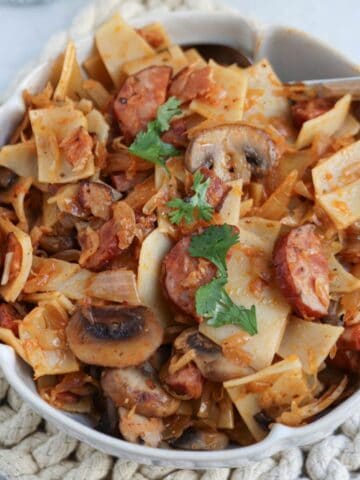
Looking for more traditional Polish comfort food? Try my Polish łazanki with kielbasa and sauerkraut next.
Jump to:
Recipe at a glance
🥩 What it is: Kotlet schabowy is a traditional Polish breaded pork chop made by pounding pork loin thin, coating it in flour, egg, and breadcrumbs, then pan-frying until golden and crispy.
🇵🇱 Cuisine: Polish
⏱️ Prep time: 15 minutes
🔥 Cook time: 10 minutes
⌛ Total time: About 25 minutes
⭐ Difficulty: Easy
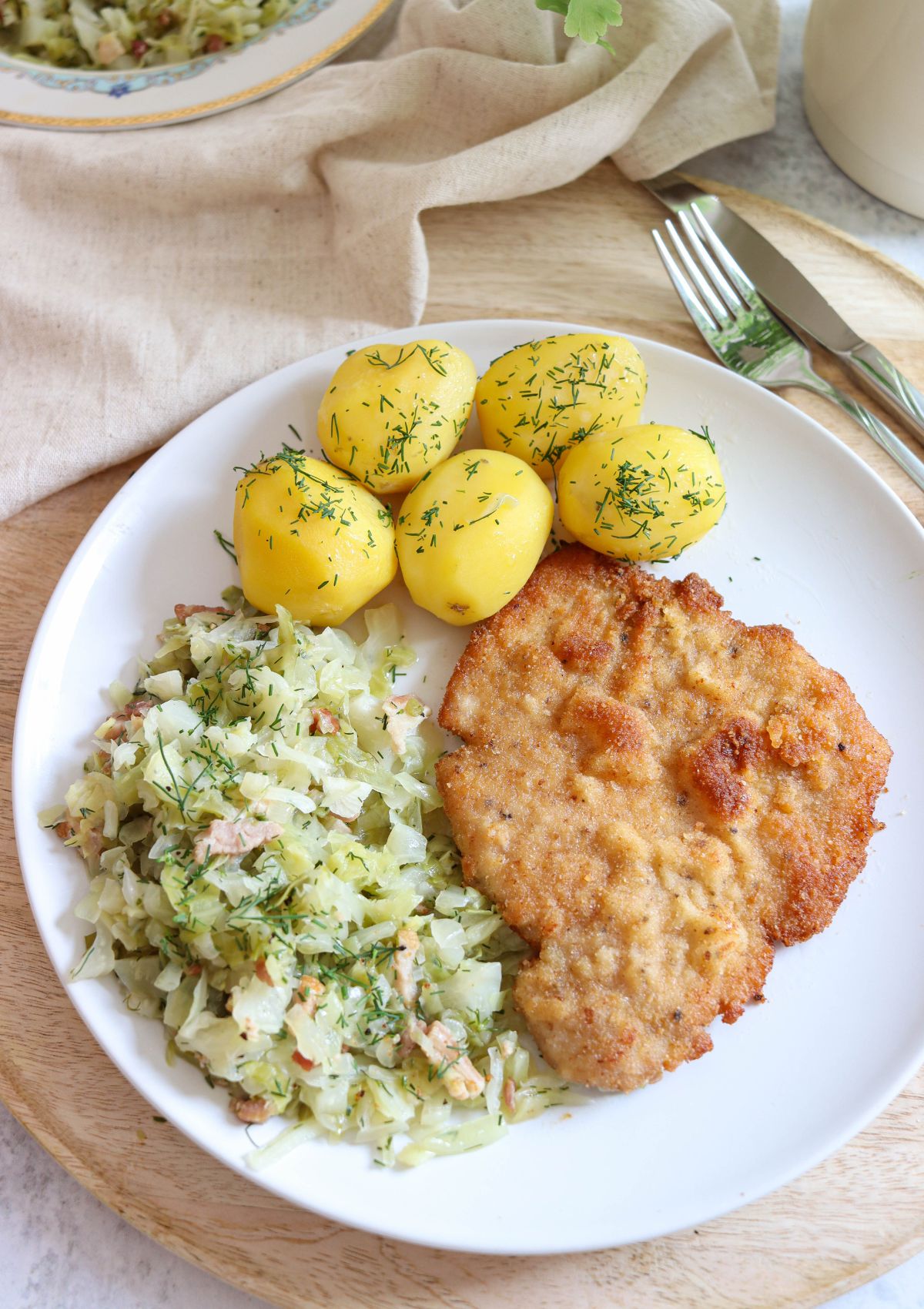
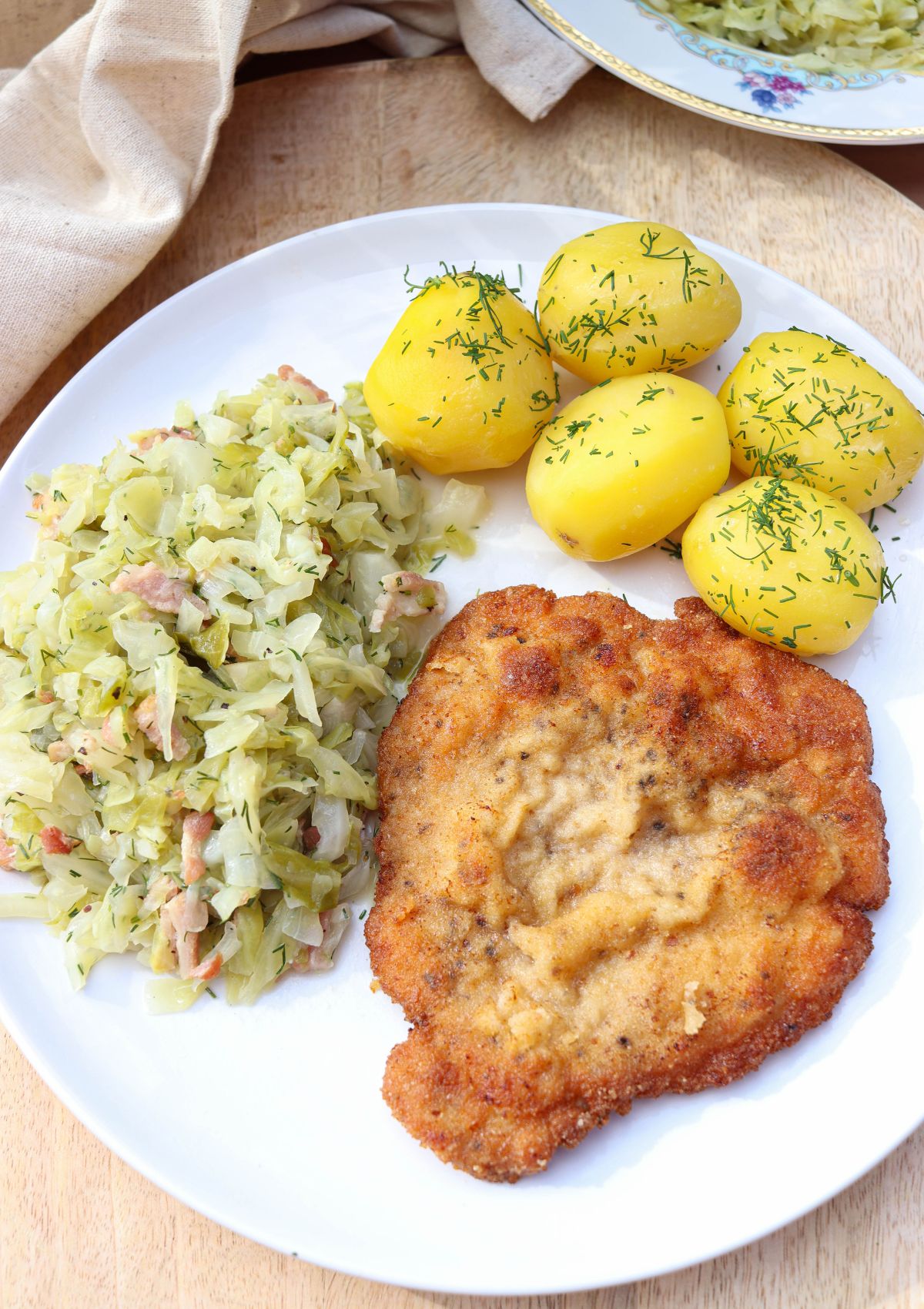
🍽️ Serve with: Mashed potatoes, dill potatoes, mizeria (Polish cucumber salad), braised cabbage, ogórki małosolne (half-sour pickles) or Polish beet salad (buraczki).
Traditional Polish breaded pork cutlet
Kotlet schabowy (pronounced kot-let skha-BOH-vih) is one of the most iconic dishes in Polish cuisine. It's a thin pork loin cutlet that's breaded and pan-fried until crisp and golden.
While it's often compared to German schnitzel, schabowy has become a beloved staple of Polish home cooking and Sunday family dinners.
In Poland, you'll find kotlet schabowy everywhere—from home kitchens to milk bars (bar mleczny) and traditional restaurants. It's most often served with potatoes and a vegetable side like braised cabbage.
If you're interested in exploring more traditional dishes, browse all of my Polish recipes or try another family favorite, Kotlety Mielone, Poland's classic breaded pork meat patties.
Ingredients
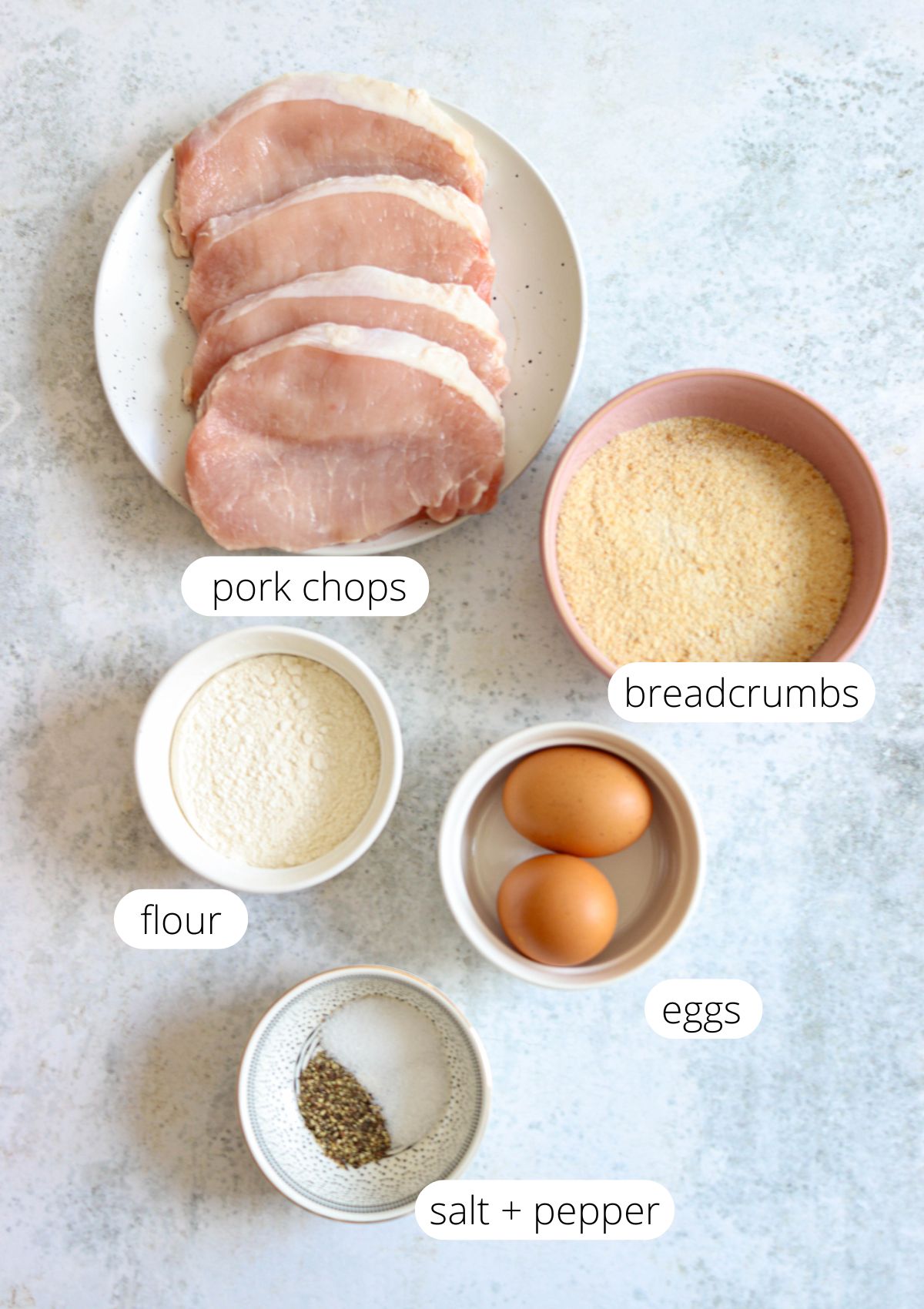
- Boneless pork loin chops: The traditional cut for kotlet schabowy. Look for chops about ½–⅝ inch thick, then pound them to about ¼ inch.
- Breadcrumbs: Plain, fine breadcrumbs create the classic crispy coating. I don't recommend panko for this recipe.
- Eggs: Help the breadcrumbs stick to the pork.
- All-purpose flour: Creates the first layer of breading so the coating stays in place while frying.
- Salt & black pepper: Simple seasonings that let the flavor of the pork shine.
- Neutral oil or clarified butter: Use a neutral oil (canola, vegetable, light olive oil), clarified butter (masło klarowane), or a combination of both for frying.
See recipe card for quantities.
Instructions
- Step 1: Pound the pork chops with a kitchen mallet to about ¼ inch thick. I cover the pork with plastic wrap or parchment paper to avoid splatter.
- Step 2: Set out three shallow bowls: one with flour, one with beaten eggs, and one with breadcrumbs.
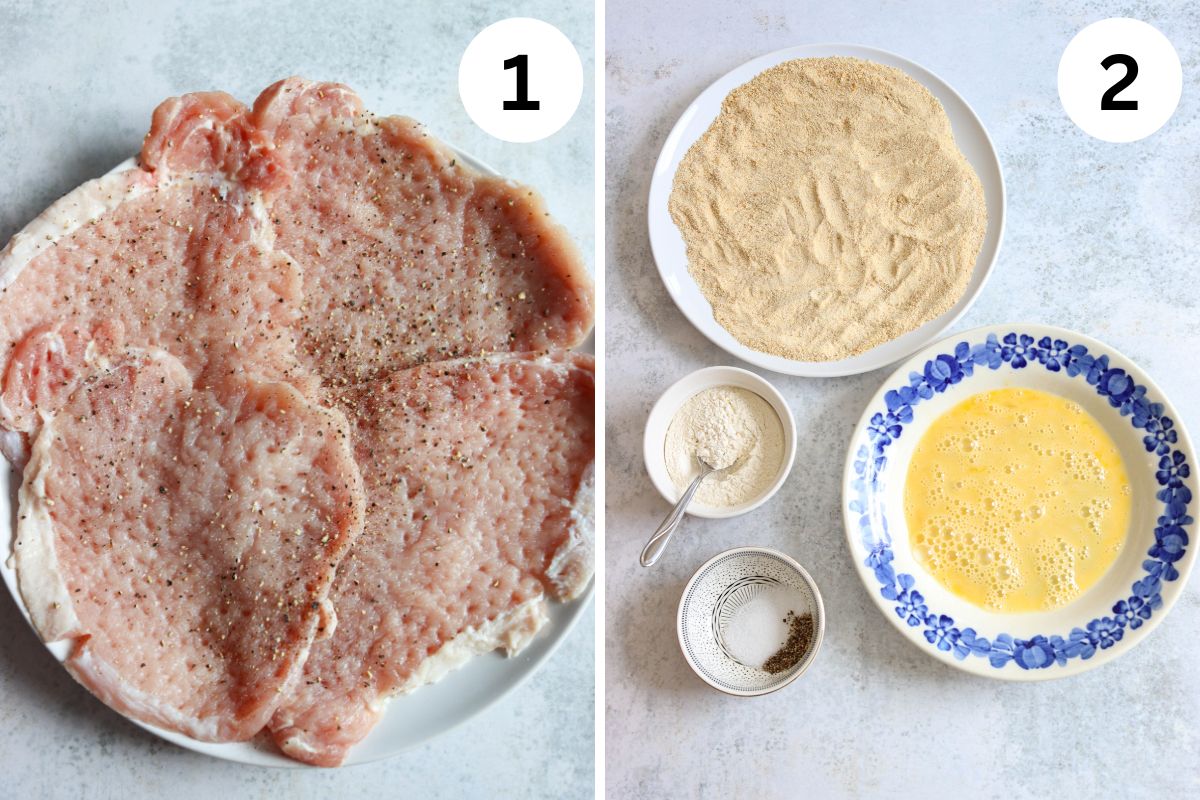
- Step 3: Coat each pork chop lightly in flour, then dip it into the beaten egg. Finally, press it into the breadcrumbs until evenly coated on both sides.
- Step 4: Heat the oil or clarified butter in a large skillet over medium heat. Fry the cutlets for about 3–4 minutes per side, or until golden brown and cooked through.
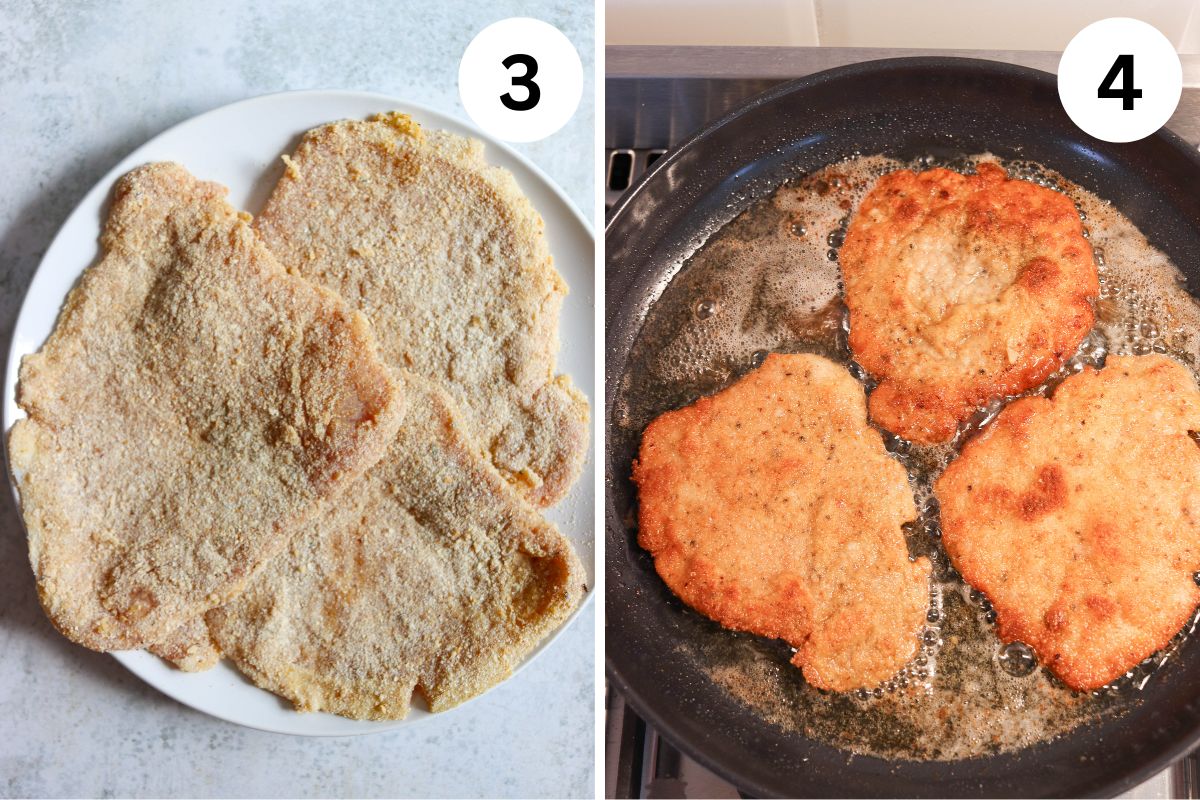
- Step 5: Transfer to a paper towel-lined plate or wire rack and serve immediately.
What to Serve with Kotlet Schabowy
In Poland, kotlet schabowy is almost always served with potatoes and a vegetable side. Here are some traditional pairings that complete the meal:
- Mizeria (Polish Cucumber Salad) – cool, creamy cucumbers are the perfect contrast to crispy pork.
- Polish Beet Salad (Buraczki) – slightly sweet beets pair beautifully with the savory cutlets.
- Boiled or mashed potatoes – simple, buttery potatoes are the most traditional choice. Often sprinkled with dill!
- Braised cabbage – a classic side that's often served in Polish homes.
- Sauerkraut – tangy and hearty, especially during the colder months. It can be cooked or raw in a salad.
- Pickled cucumbers – their bright acidity balances the richness of the fried pork.
If you're serving a traditional Polish Sunday dinner, add a bowl of dill pickle soup or chicken soup before the main course for the full experience.
Storage & freezing tips
- Fridge: Store leftover kotlet schabowy in an airtight container in the refrigerator for up to 3 days.
- Freezer: Once completely cooled, place the cutlets in a freezer-safe container with parchment paper between each one to prevent sticking. Freeze for up to 3 months.
- Reheating: For the crispiest results, reheat the pork cutlets in a 350°F oven or air fryer until heated through.
- Avoid microwaving if possible, as it softens the breadcrumb coating.
Tips for Success
Making kotlet schabowy is simple, but a few small techniques will give you the crispiest coating and the juiciest pork every time.
Pound the pork evenly
Pounding the pork chops to about ¼ inch thick helps them cook quickly and evenly. It also tenderizes the meat, giving you the classic texture of traditional Polish schabowy.
Pat the pork dry
Before seasoning and breading, blot the pork chops with paper towels. Removing excess moisture helps the flour stick better and creates a crispier coating.
Don't skip the flour
It may seem like an unnecessary step, but the flour helps the egg cling to the meat, which means the breadcrumbs stay attached during frying.
Press the breadcrumbs onto the pork
After coating the pork in breadcrumbs, gently press them onto both sides of the chop. This helps create an even coating that won't fall off while frying.
Fry over medium heat
If the oil is too hot, the breadcrumbs will brown before the pork is fully cooked. If it's too cool, the breading will absorb too much oil. Medium heat gives you the perfect golden crust.
Don't overcrowd the pan
Cook only one or two cutlets at a time, depending on the size of your skillet. Overcrowding lowers the oil temperature and prevents the breading from becoming crispy.
Serve immediately
Kotlet schabowy is at its very best right out of the pan while the coating is crisp and the pork is still juicy.
Recipe FAQs
Both are breaded, pan-fried cutlets, but traditional Polish kotlet schabowy is made with pork loin, while schnitzel is most commonly associated with veal. Schabowy is also typically served with classic Polish sides like potatoes, mizeria, or braised cabbage.
Boneless pork loin chops work best because they're easy to pound thin and cook evenly. Bone-in chops can be used, but they're more difficult to flatten and bread.
You can, but plain, fine breadcrumbs are traditional. Panko creates a thicker, crunchier coating that's different from the classic texture of Polish schabowy.
A neutral oil with a high smoke point, such as avocado, canola, or vegetable oil, works well. For the most authentic flavor, fry the cutlets in clarified butter (masło klarowane) or use a combination of clarified butter and oil.
This is usually caused by excess moisture on the pork or skipping the flour coating. Pat the pork dry before breading, coat it lightly in flour first, then egg and breadcrumbs. Press the breadcrumbs onto the meat and avoid moving the cutlets too much while they're frying.
More Polish recipes
Looking for other recipes like this? Try these:


Recipe
Kotlet Schabowy (Polish Breaded Pork Chops)
Ingredients
- 4 boneless pork loin chops sliced thick, about 5-6 oz each
- 1 cup breadcrumbs
- 2 large eggs
- 2-3 tablespoon all-purpose flour
- ½ teaspoon salt
- ¼ teaspoon black pepper ground
- ⅓ cup neutral oil for frying, or clarified butter (see Note)
Instructions
- Place each pork chop between two sheets of plastic wrap or parchment paper. Using a meat mallet, pound to about ¼ inch thick. Season both sides with salt and pepper.
- Prepare three shallow bowls: flour, lightly beaten eggs and breadcrumbs.
- Dredge each pork chop in flour (or just sprinkle it), shaking off the excess. Dip into the beaten eggs, allowing any excess to drip off, then coat thoroughly with breadcrumbs, pressing gently so they adhere.
- Heat the oil or clarified butter in a large skillet over medium heat until shimmering.
- Working in batches if needed, fry the pork chops for 3–4 minutes per side, or until deeply golden brown and cooked through.
- Serve immediately with potatoes and braised cabbage (or any vegetable side) or keep in warm over until ready to serve.
Video
Notes
You may also like

Meet the Author
Hi, I'm Agnieszka. I'm a mom of three and recipe developer, writer and photographer behind Wholly Tasteful. I love creating comforting, delicious, family-friendly recipes that you can feel good about.
Mike says
Here from insta. Love me some fried meat! Thanks for posting.
Stacy says
Great recipe! My breading finally stayed on!