

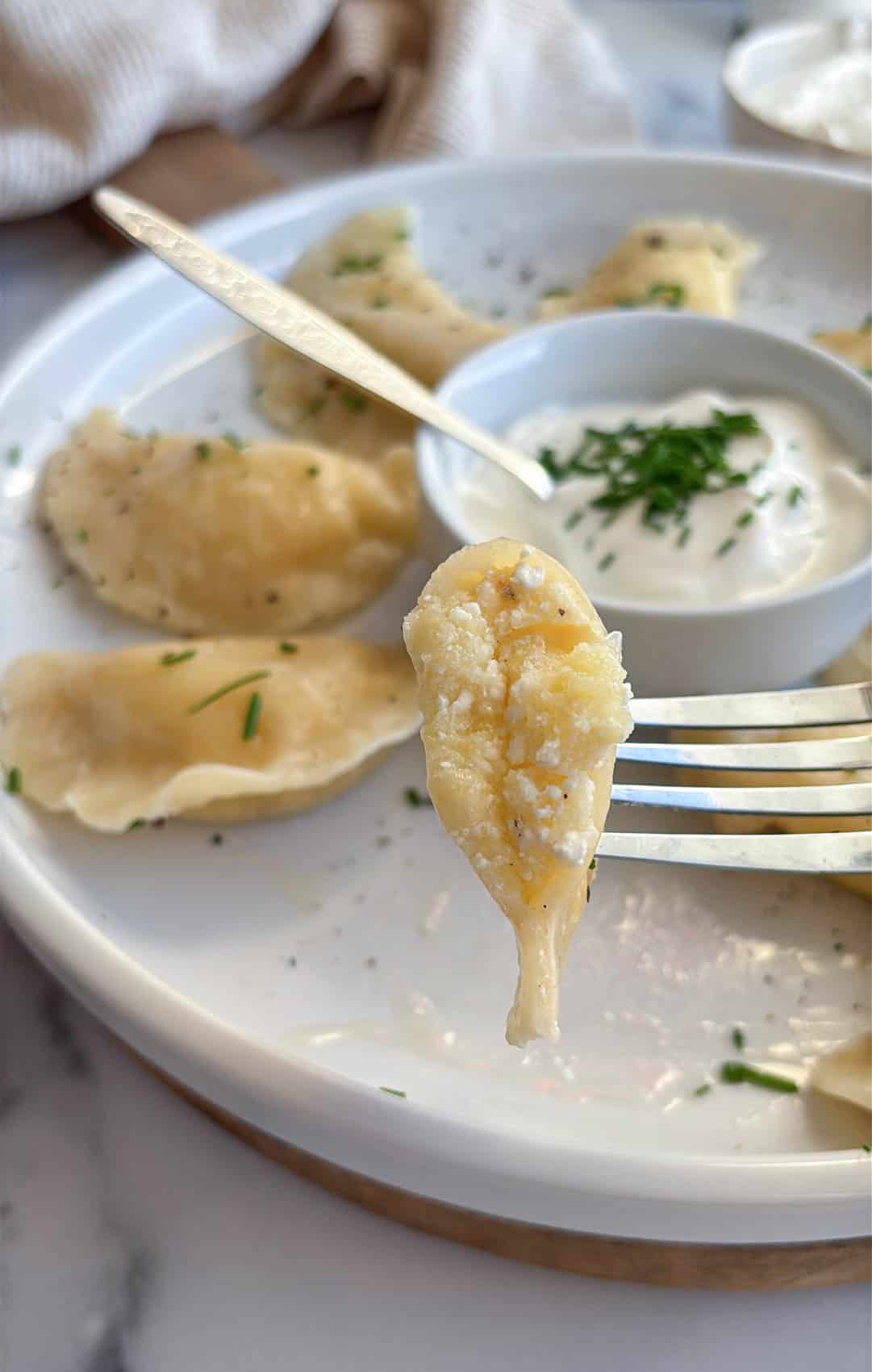
Pierogi ruskie are traditional Polish dumplings filled with creamy potatoes, farmer's cheese, and sautéed onions. Served with buttery onions and a dollop of sour cream, these homemade potato and cheese pierogi are the ultimate Polish comfort food!

Of all the different kinds of Polish pierogi, ruskie have always been one of my favorites. These classic potato and cheese dumplings are one of the most popular types of pierogi in Poland, and for good reason.
Growing up in Poland, pierogi were a regular part of our meals, along with other Polish classic recipes like gołąbki (stuffed cabbage rolls) and kotlet schabowy (breaded pork chops). Pierogi ruskie have always been one of my favorites. The filling is simple but so flavorful, with mashed potatoes, tangy farmer's cheese, and buttery sautéed onions.
For this recipe, I'm using my Foolproof Pierogi Dough, which is soft, easy to roll, and made with just four ingredients. I'll also show you how to make the traditional filling using ingredients you can find in grocery stores outside of Poland.
Jump to:
What are pierogi ruskie?
Pierogi ruskie (pronounced pyeh-ROH-ghee ROOS-kyeh) are traditional Polish dumplings stuffed with a mixture of mashed potatoes, twaróg (Polish farmer's cheese), and sautéed onions.
Despite their name, pierogi ruskie are not Russian pierogi! The name refers to the historical region of Red Ruthenia (Ruś Czerwona), which included parts of present-day southeastern Poland and western Ukraine.
They're traditionally boiled and served with melted butter, sautéed onions, or sour cream. Some people also like to pan-fry leftover pierogi until golden and slightly crispy.
Ingredients & Substitutions
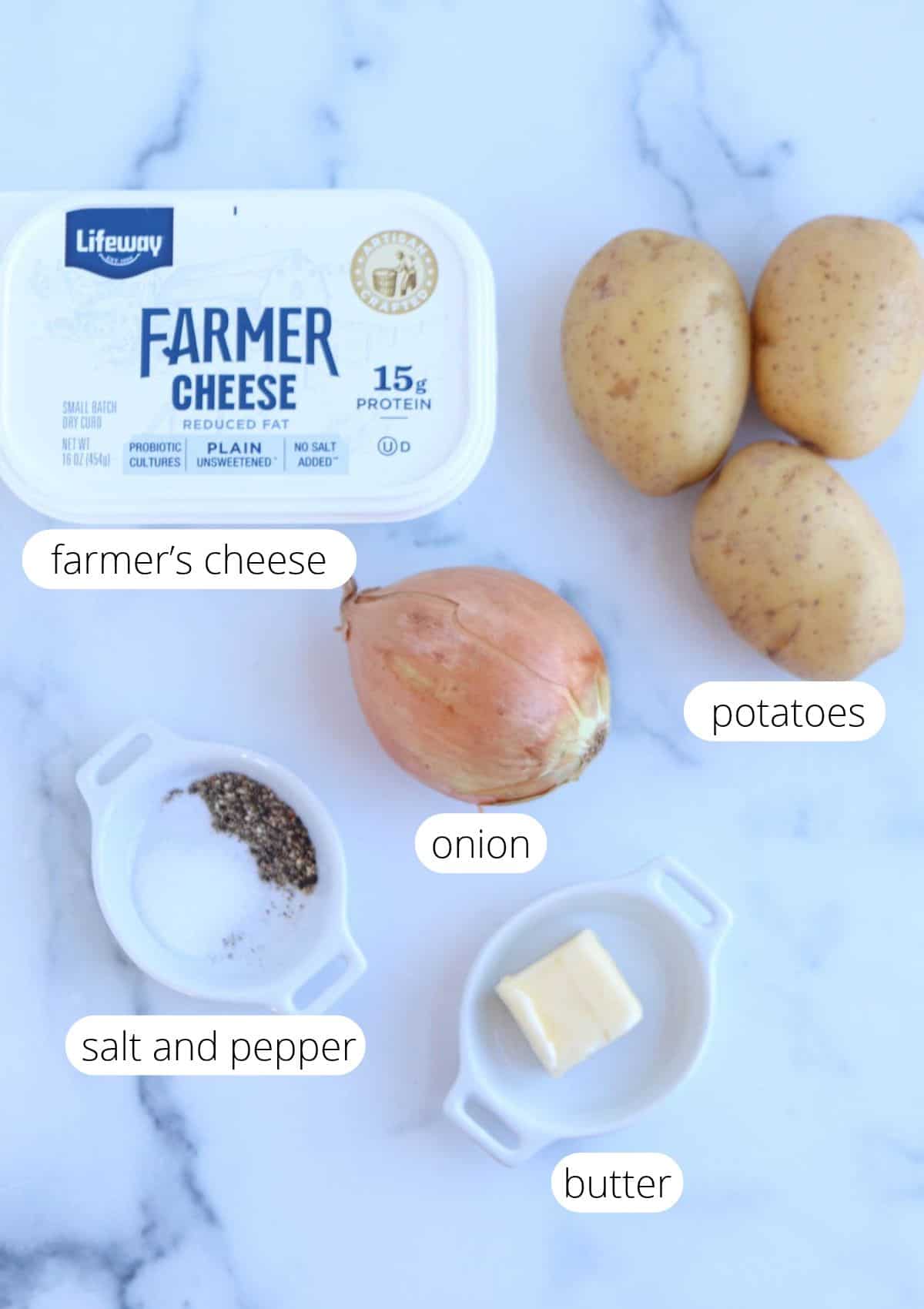
- Potatoes: I use Yukon Gold potatoes because they're naturally creamy, but russet potatoes also work.
- Farmer's cheese (twaróg): Traditional pierogi ruskie are made with Polish twaróg, a crumbly farmer's cheese. I use Lifeway Farmer Cheese, which is creamier and easier to find in the US. Drained cottage cheese or cream cheese can also work, although the flavor and texture will be slightly different.
- Yellow onion: Adds sweetness and savory flavor to the filling when sautéed in butter.
- Butter: For sautéing the onion. Salted or unsalted butter works.
- Salt and black pepper: Essential for bringing out the flavors of the filling. Taste and adjust as needed.
For the dough, you only need 4 ingredients:
all purpose flour, boiling hot water, melted butter and salt
See recipe card for quantities.
Instructions
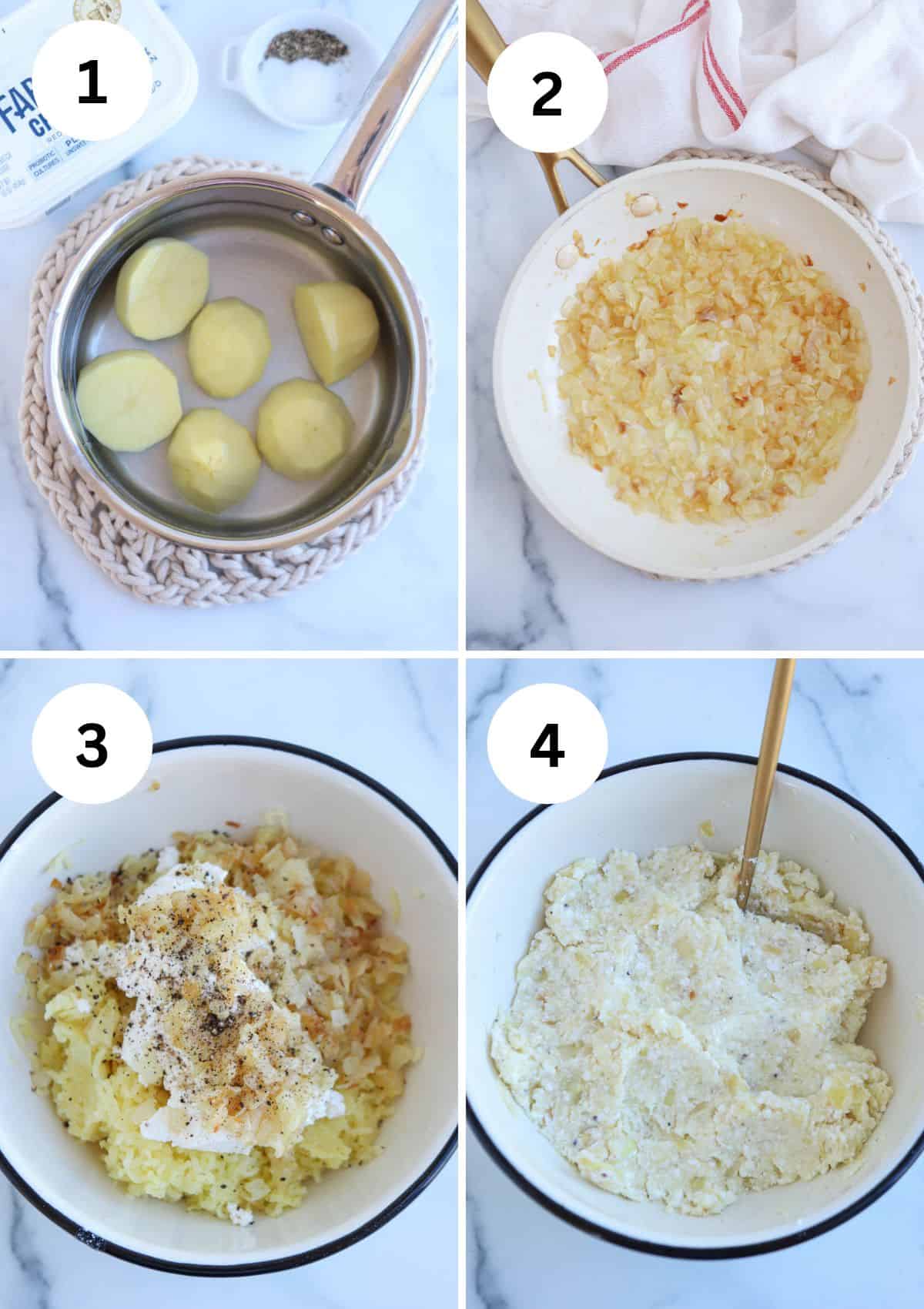
- STEP 1: Cook the potatoes: Peel the potatoes and boil them in salted water until fork-tender, about 15–20 minutes. Drain well and mash until smooth. (Photo 1)
- STEP 2: Sauté the onion: Finely chop the onion and sauté it in butter over medium heat until soft and golden, about 8–10 minutes. (Photo 2)
- STEP 3: Combine the ingredients: Add the farmer's cheese, sautéed onion, salt, and black pepper to the mashed potatoes. (Photo 3)
- STEP 4: Mix the filling: Stir everything together until well combined. Taste and adjust the seasoning with more salt and pepper if needed. Set aside. (Photo 4)
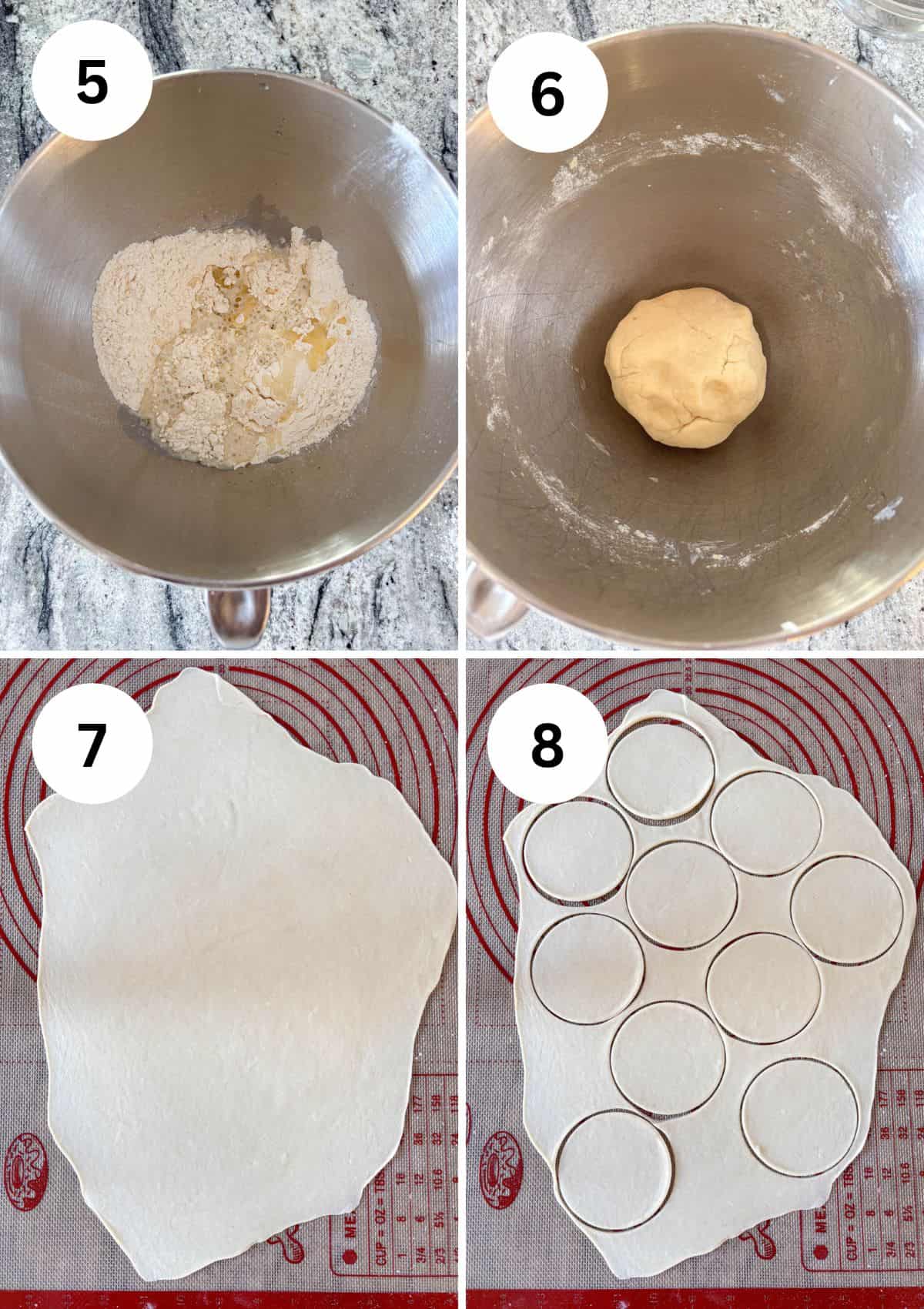
- STEP 5: Combine the dough ingredients: Add the flour, salt, hot water, and melted butter to the bowl of a stand mixer. (Photo 5)
- STEP 6: Knead the dough: Using the dough hook, knead until a smooth, soft dough forms. Cover and let rest for 20 minutes. You can also knead the dough by hand. See my Foolproof Pierogi Dough recipe for more detailed instructions. (Photo 6)
- STEP 7: Roll out the dough: Divide the dough into portions and roll one portion at a time on a lightly floured surface until thin, about 1/16–⅛ inch thick (2–3 mm). Keep the remaining dough covered to prevent drying. (Photo 7)
- STEP 8: Cut out circles: Using a round cookie cutter or the rim of a glass (about 3 inches in diameter), cut circles from the dough. Gather the scraps and reroll as needed. (Photo 8)
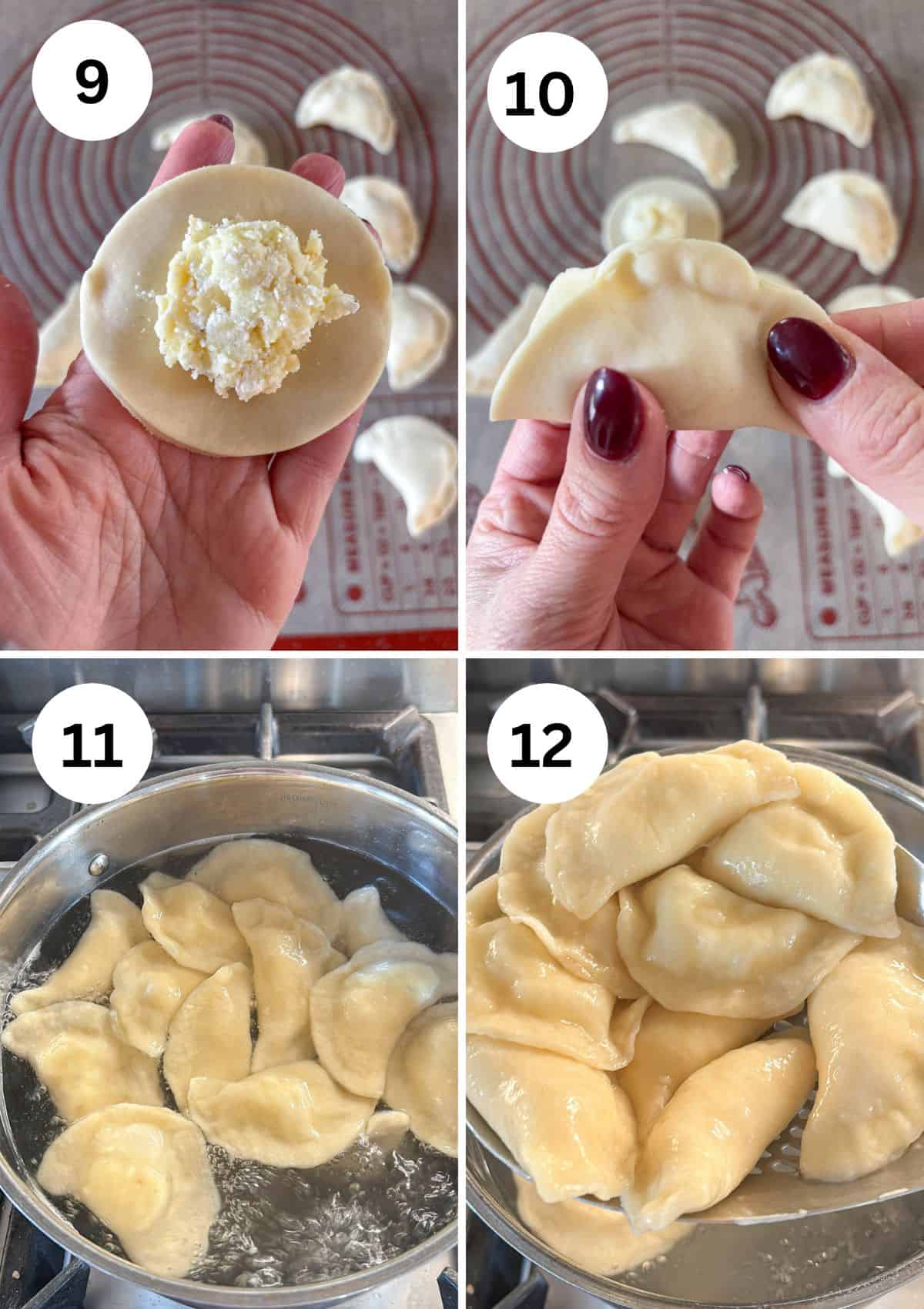
- STEP 9: Add the filling: Place about 1 tablespoon of the potato and cheese filling in the center of each dough circle. (Photo 9)
- STEP 10: Seal the pierogi: Fold the dough over the filling to form a half-moon shape. Press the edges together firmly to seal, making sure no filling gets caught between the edges. (Photo 10)
- STEP 11: Boil the pierogi: Bring a large pot of salted water to a gentle boil. Add the pierogi in batches, stirring gently to prevent sticking. Once they float to the surface, cook for another 2–3 minutes. (Photo 11)
- STEP 12: Remove and serve: Using a slotted spoon, transfer the cooked pierogi to a plate or serving dish. Toss with a little melted butter to prevent sticking. (Photo 12)
How to Serve Potato and Cheese Pierogi
Pierogi ruskie are delicious straight out of the pot, but there are several traditional ways to serve them:
- Tossed in butter: Coat freshly boiled pierogi in melted butter for extra flavor and to keep them from sticking together. I like to sprinkle them with chopped chives and freshly ground black pepper.
- With caramelized onions: Top your pierogi with buttery, golden caramelized onions for a classic Polish touch.
- With sour cream: Serve with a dollop of sour cream on the side for dipping.
- Pan-fried: For crispy pierogi, heat a little butter in a skillet and fry the boiled pierogi until golden brown on both sides. This is also a great way to reheat leftovers!
Storage and Freezing
- Refrigerator: Store leftover cooked pierogi in an airtight container in the refrigerator for up to 3–4 days. Toss them with a little melted butter to prevent sticking.
- Freezing uncooked pierogi: Arrange assembled pierogi in a single layer on a parchment-lined baking sheet, making sure they don't touch. Freeze until solid, then transfer to a freezer-safe bag or container. Freeze for up to 3 months.
- Freezing cooked pierogi: Let the boiled pierogi cool completely, toss lightly with butter, and freeze in a single layer before transferring to a freezer-safe container.
- Cooking from frozen: There's no need to thaw! Drop frozen pierogi directly into gently boiling salted water. Once they float, cook for another 3–4 minutes, or until heated through.
- Reheating: Warm leftover cooked pierogi in a skillet with a little butter over medium heat until heated through and golden on both sides. You can also briefly reheat them in simmering water.
Why no cheddar cheese?
If you grew up eating Mrs. T's Pierogies, you're probably familiar with potato and cheddar pierogi! And while you can absolutely add shredded cheddar cheese to the filling, that's more of an American variation. Traditional Polish pierogi ruskie are made with twaróg (Polish farmer's cheese), which has a slightly tangy flavor and crumbly texture. Both versions are delicious, but if you're looking for authentic Polish pierogi ruskie, farmer's cheese is the way to go!

Top Tip
As you're assembling your pierogi, arrange them in a single layer on a lightly floured baking sheet (one by one), making sure they don't touch. Cover with a clean kitchen towel to prevent the dough from drying out. If you're not planning to cook them right away, I recommend freezing them rather than leaving them out for an extended period (2 hours max).
Pierogi FAQs
Traditional pierogi ruskie are made with twaróg, a crumbly Polish farmer's cheese with a slightly tangy flavor. If you can't find twaróg, Lifeway Farmer Cheese is a good substitute. You can also use well-drained cottage cheese or cream cheese, although the flavor and texture will be different.
Pierogi can open during cooking if the edges aren't sealed properly or if they're overfilled. Make sure the edges are free of filling and press them together firmly. Also, avoid boiling them too vigorously, as this can cause them to break apart.
Yes, for this recipe, pierogi should be boiled before pan-frying. Once cooked, you can brown them in a skillet with butter until golden and slightly crispy on both sides.
No! Despite their name, pierogi ruskie are not Russian. The name refers to the historical region of Red Ruthenia (Ruś Czerwona), which included parts of present-day Poland and Ukraine. Pierogi ruskie are a beloved staple of Polish cuisine.
More authentic Polish recipes
Looking for other recipes like this? Try these:


Recipe

Authentic Polish Pierogi Ruskie (Potato and Cheese Pierogi)
Equipment
- 1 standup mixer if using
- 1 round cookie cutter or a large glass
- 1 potato ricer or potato masher
Ingredients
Pierogi dough
- 2 cups all-purpose flour spooned and leveled (250 grams)
- ½ cup boiling hot water (120 ml), you may need to increase by 1-2 tbsp
- 3 tablespoon butter melted
- ½ teaspoon salt
Potato Cheese Filling
- 12 oz potatoes I used Yukon Gold
- 7 oz farmer cheese or twaróg, see Notes for substitutions
- 1 yellow onion medium, chopped
- 2 tablespoon butter
- ½ teaspoon salt
- ½ tsp black pepper or more to taste
For serving
- caramelized onions, melted butter, sour cream
Instructions
The filling
- Peel the potatoes, cut them into chunks, and cook in salted boiling water for 15–20 minutes, or until fork-tender. Drain well and mash until smooth.
- Meanwhile, melt 2 tablespoons of butter in a skillet over medium heat. Add the chopped onion and cook for 10-20 minutes, stirring occasionally, until soft and golden.
- Add the farmer's cheese (or whatever cheese you're using), cooked onions, salt, and pepper to the mashed potatoes. Mix until well combined. Taste and adjust the seasoning as needed. Set aside.
The dough
- Place the flour and salt in the bowl of a stand mixer fitted with a dough hook. Add the melted butter and hot water. Mix and knead until the dough is smooth and elastic. Add another 1–2 tablespoons of water if the dough seems too dry.
- Cover the dough and let it rest for 20 minutes.
- Divide the dough into portions. Working with one portion at a time, roll it out on a lightly floured surface to about 1/16–⅛ inch (2–3 mm) thick. Keep the remaining dough covered.
- Cut out circles using a 3-inch round cutter or a glass. Gather and reroll the scraps.
Assemble and cook the pierogi
- Place about 1 tablespoon of filling in the center of each dough circle. Fold in half and pinch the edges firmly to seal, making sure the filling doesn't get caught in the seam.
- Arrange the assembled pierogi on a lightly floured baking sheet and cover with a clean kitchen towel while you finish the remaining dough.
- Bring a large pot of salted water to a gentle boil. Cook the pierogi in batches, stirring gently to prevent sticking. Once they float to the surface, continue cooking for 2–3 minutes.
- Remove with a slotted spoon and toss with melted butter. Serve warm with caramelized onions and sour cream, or pan-fry the boiled pierogi in butter until golden brown on both sides.
Notes
Nutrition
You may also like





Meet the Author
Hi, I'm Agnieszka. I'm a mom of three and recipe developer, writer and photographer behind Wholly Tasteful. I love creating comforting, delicious, family-friendly recipes that you can feel good about.
Leave a Comment