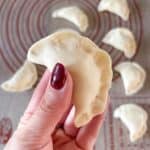
Foolproof Pierogi Dough (Polish Recipe)
This foolproof Polish pierogi dough recipe uses just 4 simple ingredients to make soft, elastic dough that's easy to roll, fill, and shape without sticking or tearing.
Servings: 30 pierogi
Equipment
- 1 standup mixer or just a bowl if making by hand
- 1 round cookie cutter or a large glass
Ingredients
- 2 cups all purpose flour spooned and leveled (250 grams)
- ½ teaspoon salt
- 3 tablespoon butter melted
- ½ cup boiling hot water (110-125 ml) see Notes
Instructions
- Standup mixer method: Add the flour, salt, melted butter, and ½ cup of boiling water to the bowl of a stand mixer. Stir with a spoon until roughly combined, then knead with the dough hook for about 5 minutes, or until a smooth dough ball forms. The dough should be soft, elastic, and slightly sticky. If it seems too dry, add another 1-2 tablespoon of boiling hot water.
- By Hand Method: Add the flour and salt to a large mixing bowl. Pour in the melted butter and ½ cup of boiling water. Stir with a spoon until roughly combined and cool enough to handle. Transfer the dough to a lightly floured surface and knead by hand for about 8–10 minutes, or until a smooth dough ball forms.
- Place the dough in a bowl and cover tightly with a lid or plastic wrap. Set aside for 20-30 minutes.
- Cut the dough in half (keep the other half covered) and roll it out on a clean surface to ⅛ inch thick (about 3mm). I use a silicone mat for rolling the dough. If the rolling pin sticks to the dough, flour it lightly. Avoid adding flour - the dough should be easy to handle and not stick to the surface.
- Using a round cookie cutter or a large spoon, cut out circles close to each other. Immediately remove any leftover dough and add it to the remaining dough. Keep it covered to avoid drying out.
- Add filling in the center of each dough circle. Fold each circle in half over the filling and pinch the edges to form pierogi.
- Repeat with remaining dough until you use it all up.
Notes
- Yield: This recipe makes approximately 25–30 pierogi, depending on the size of your cutter.
- Measure flour correctly: For best results, use a kitchen scale (you want 250 grams) or spoon and level the flour. Too much flour can make the dough tough.
- Adjust the water: If the dough feels dry or crumbly, add another 1–2 tablespoons of hot water. It should be soft, elastic, and slightly sticky.
- Don't skip resting: Let the dough rest for 20–30 minutes to make it easier to roll out.
- Avoid extra flour: The dough shouldn't stick to your work surface. Lightly flour the rolling pin only if needed.
- Keep it covered: Cover any dough you're not working with to prevent it from drying out. Dry dough can be difficult to seal.
- Pasta roller option: If using a KitchenAid pasta roller attachment, roll the dough to setting 4.